
Ariel Ameijenda
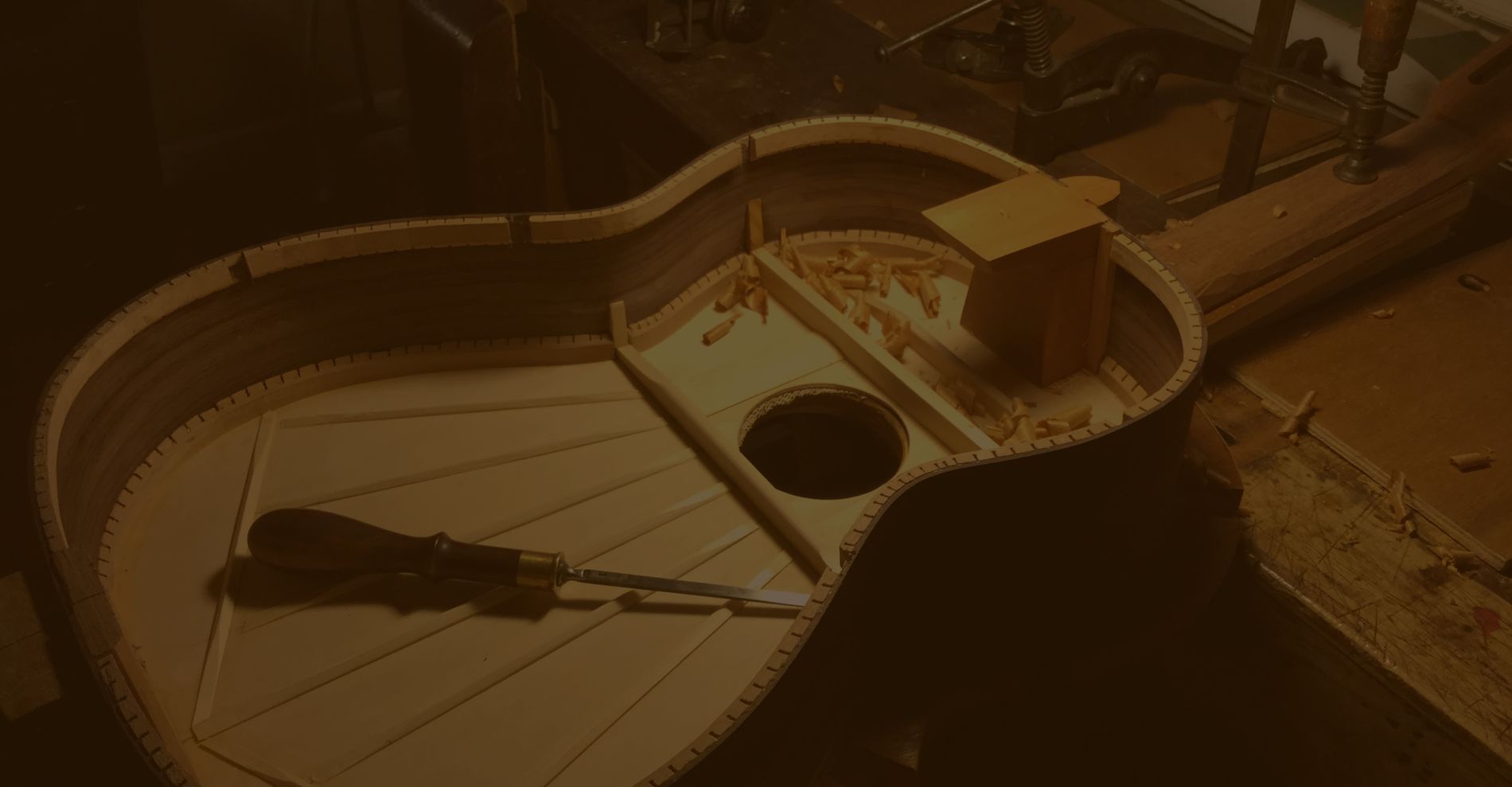
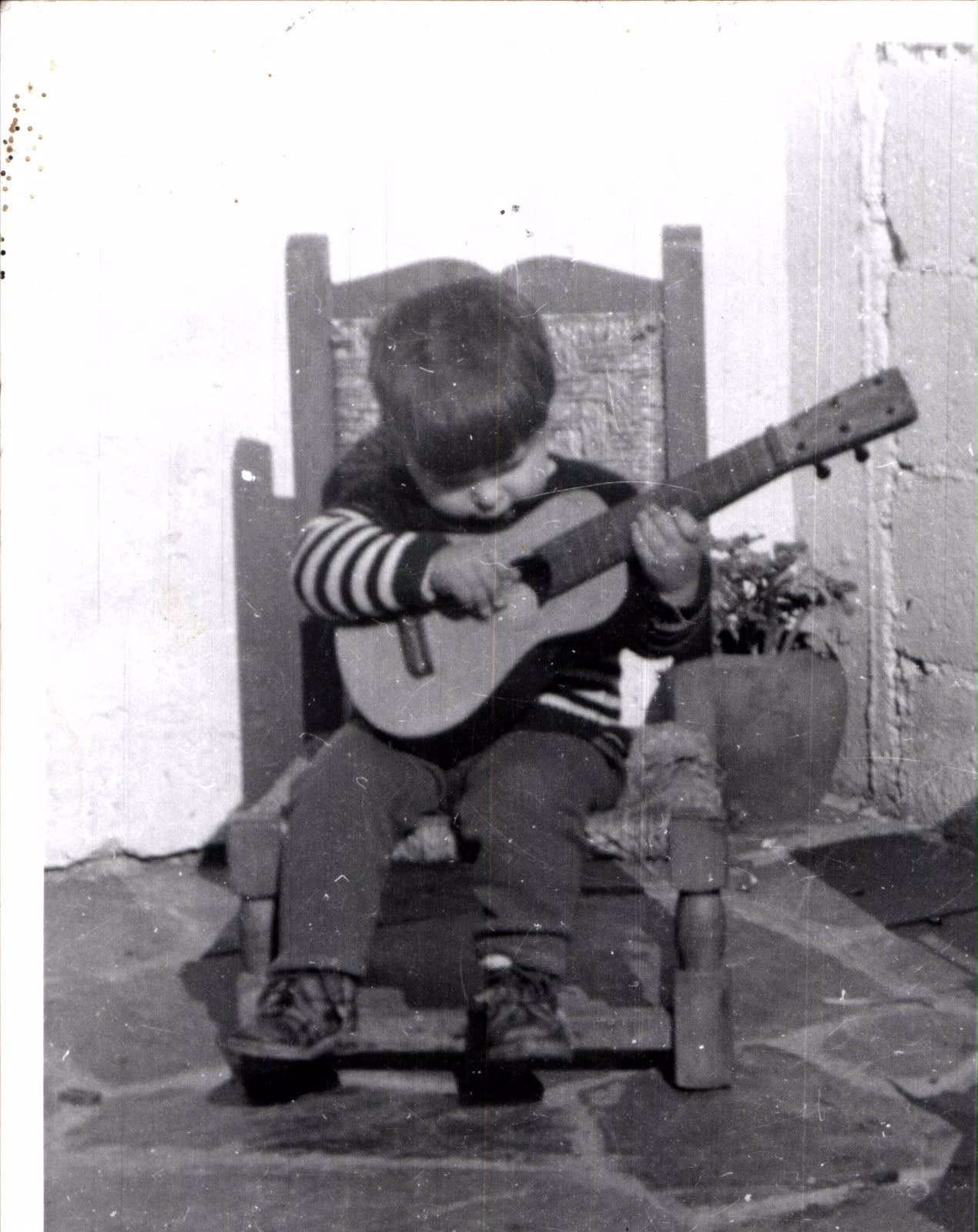
A life devoted to sound
Born in Montevideo in 1963, son of the guitar maker Manuel Ameijenda. He began helping with repairs at fourteen, alongside his father, and in 1987, at twenty-four, opened his own workshop.
At nineteen he entered university to study Musicology, paying particular attention to acoustics and music history: two subjects that still guide the way he builds. In the family workshop, guitars by Hauser, Enrique García, Domingo Esteso, Simplicio and Santos Hernández passed through his hands for repair — a direct schooling in the work of the great Masters.
He seeks balanced instruments, with crystalline, resonant trebles and full-bodied basses. He follows the traditional method of construction, but with a stamp of his own, the result of forty-five uninterrupted years of building and researching. Today he works by the sea, in Piriápolis, in a climate-controlled workshop. His guitars are played in more than thirty countries and exhibited in the world’s leading galleries.
A craft that is inherited
Two generations along the same line of work, from Barcelona to the coast of Maldonado.
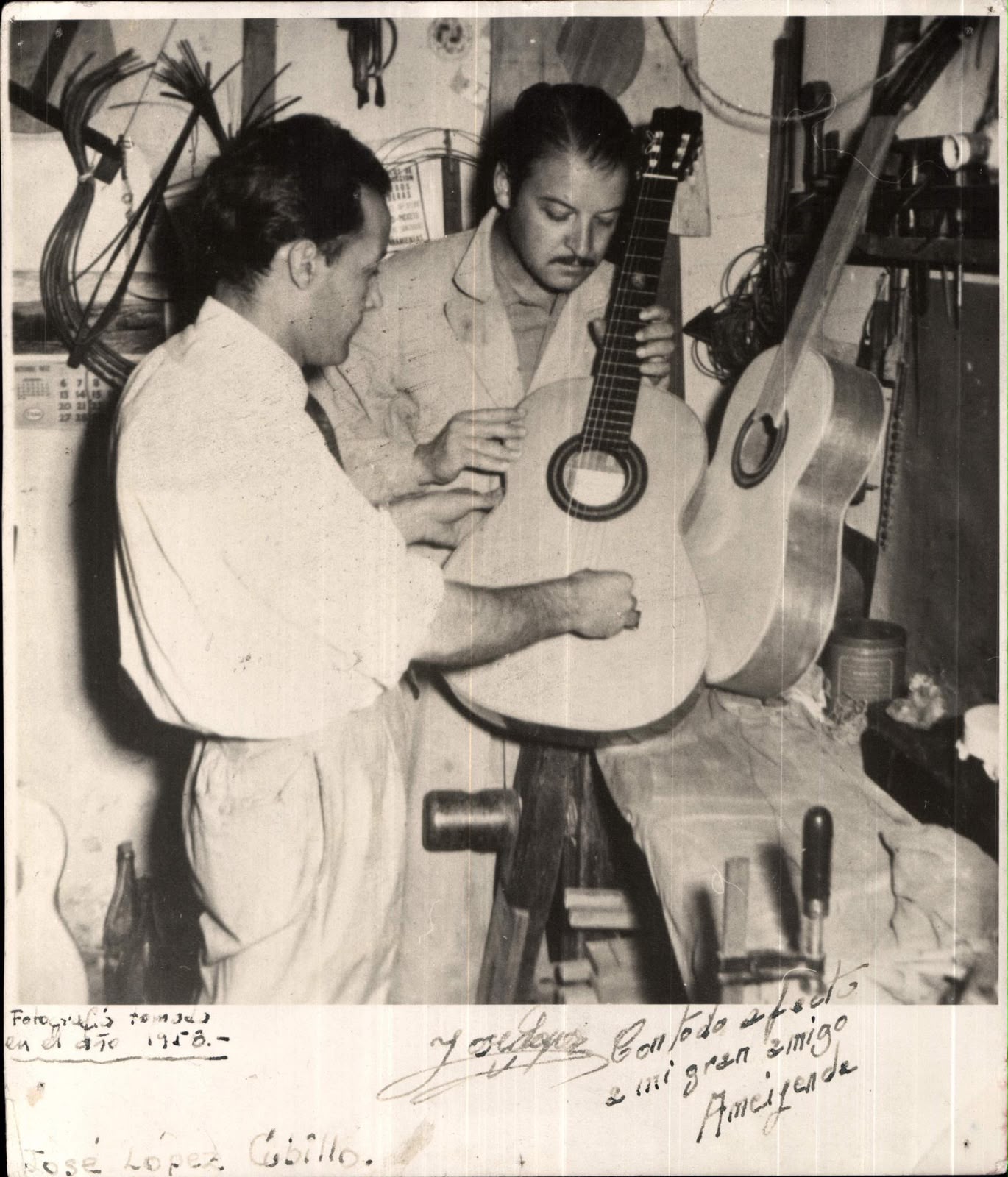
Manuel Ameijenda and José López Cubillo, 1958.
The Fleta workshop
The luthier Juan Carlos Santurión trained at Ignacio Fleta’s workshop in Barcelona in the early fifties. Through him the Catalan school reached Manuel Ameijenda — one of the two schools Ariel still follows today.
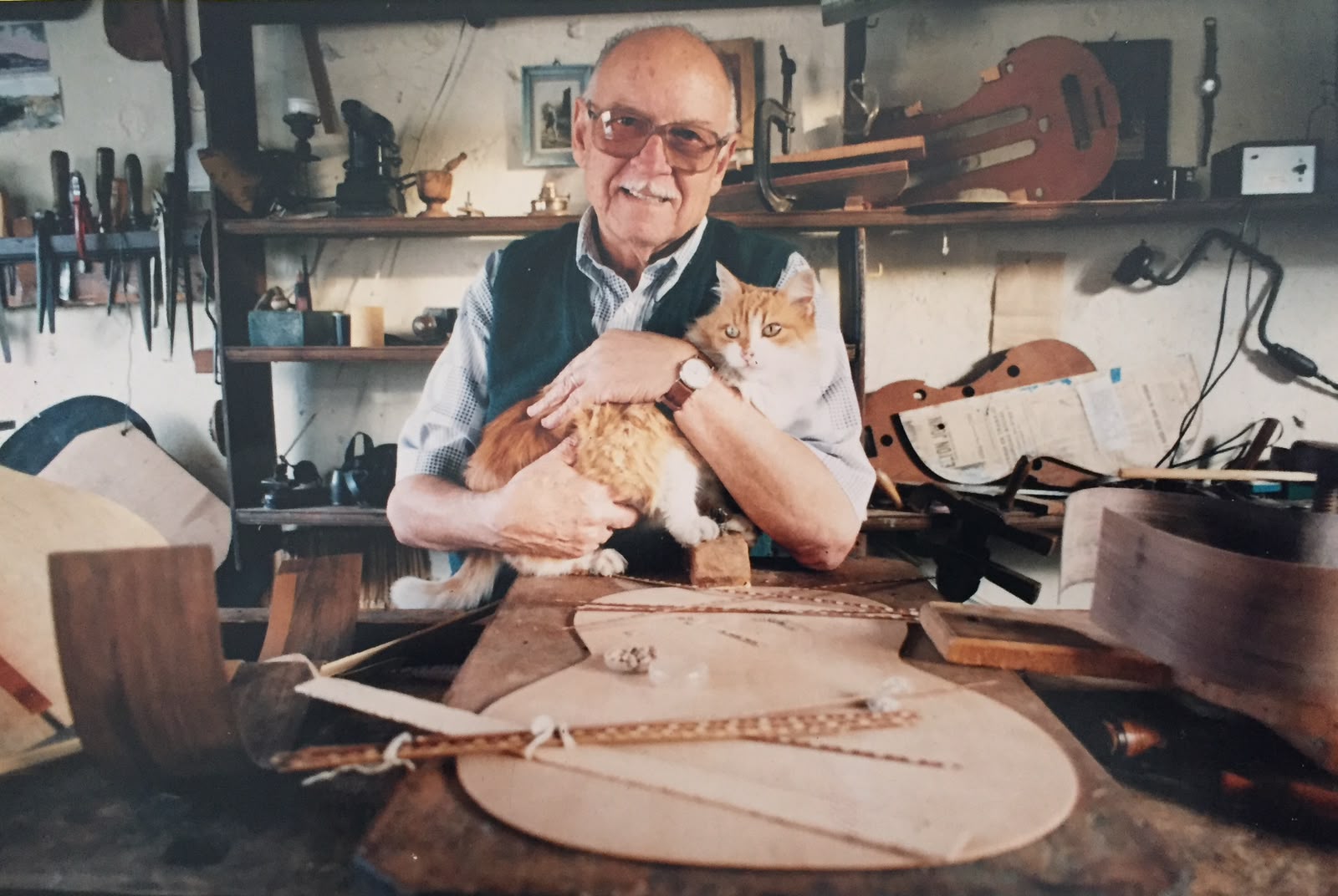
Manuel Ameijenda
He opened his workshop in 1957 and shared it for two years with José López Cubillo, first craftsman at the workshop of José Ramírez II in Madrid and Manuel’s true Master: they lived and built guitars together. Through him came the Madrid school, meeting Fleta’s Catalan school at the same bench.
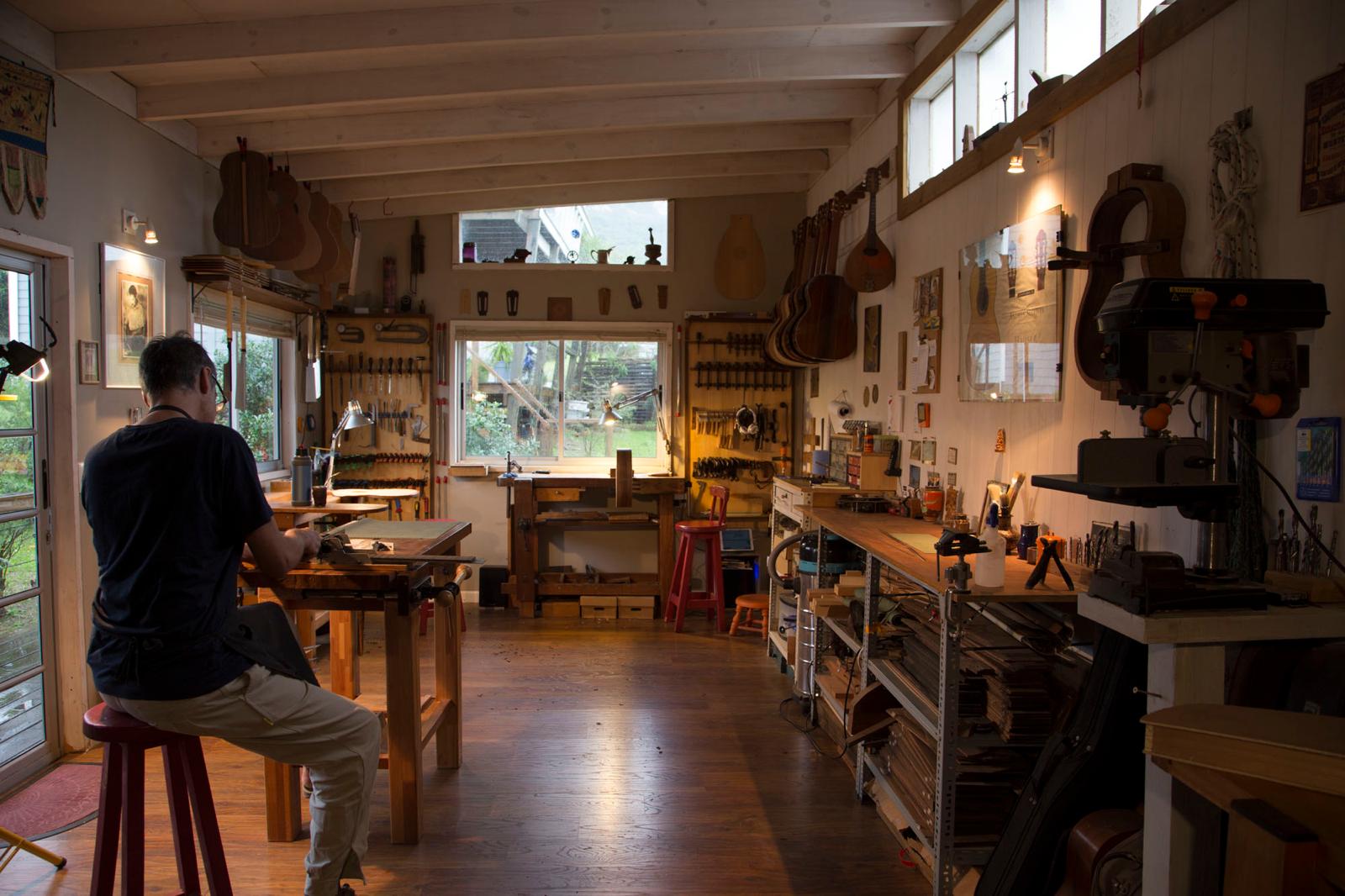
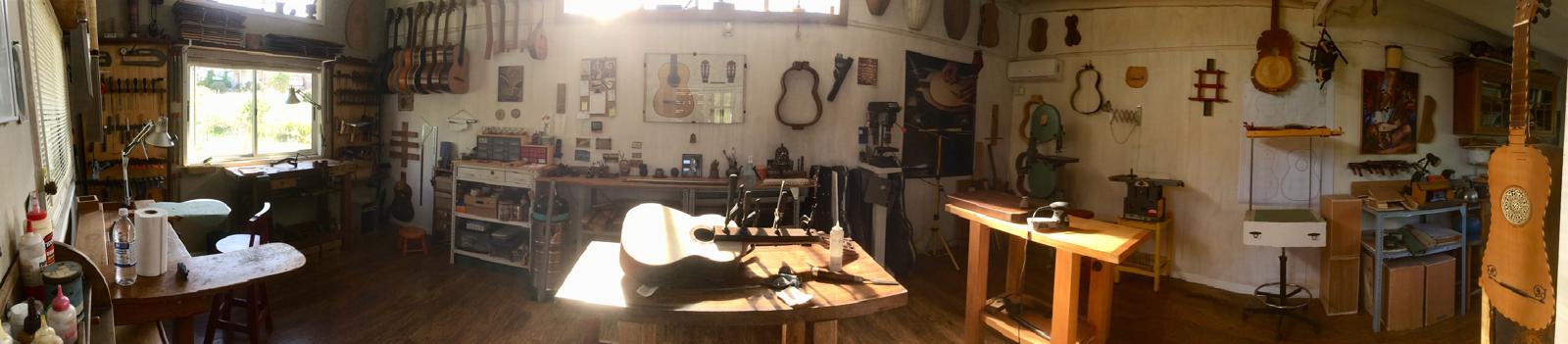
The workshop today
In Maldonado, facing the sea, where he builds one guitar at a time.
The method
The wood
Rosewood, Uruguayan blackwood, Brazilian rosewood, cedar, alerce. What decides is not only the species: it is how each board was cut, and the years it has been seasoning.
The top
The heart of the instrument. The main task is to achieve the dome, or bombé, by means of the internal structure. This creates a tension in the soundboard that counteracts the force and torsion the bridge exerts on it.
The polish
French polish, in the Spanish manner: an extremely fine finish that protects the wood without smothering its vibration.
The time
“One month of work per guitar. If I spent any less, I would be lying to the instrument and to myself.”
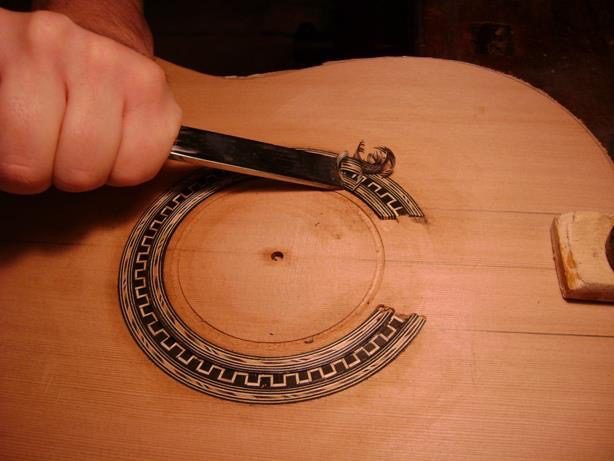
“Every rosette, every purfling, made by hand.”
His guitars around the world
From the Piriápolis workshop to the galleries and festivals where his instruments are heard.
Guitar Salon International
The Los Angeles gallery represents him in the United States.
Kurosawa Gakki
His guitars also reach Japan through Kurosawa.
Let's imagine yours
Every commission begins with a conversation. Understanding how you play is the first step towards building your guitar.